§ music catalog valuations 2026
The Music Finance Index: A First-of-Its-Kind Look Inside Catalog Valuations
Answer
The Music Finance Index confirms a structural shift: catalog value is moving toward artists who build durable IP, not just those chasing first-week streams. The biggest growth isn't in $100M legacy deals — it's in sub-$1M catalogs, in global markets, from artists who treat every release like an asset.
Intro
Duetti and Billboard just released something we've never really had before: a recurring benchmark on music catalog valuations built from the people actually in the trenches making these deals — not just the private equity firms and institutions buying catalogs after the fact.
That matters because for years, artists have been forced to make career decisions in a market with almost no transparency. This report starts pulling back the curtain.
Age Changes Everything — But Not For The Reason You Think
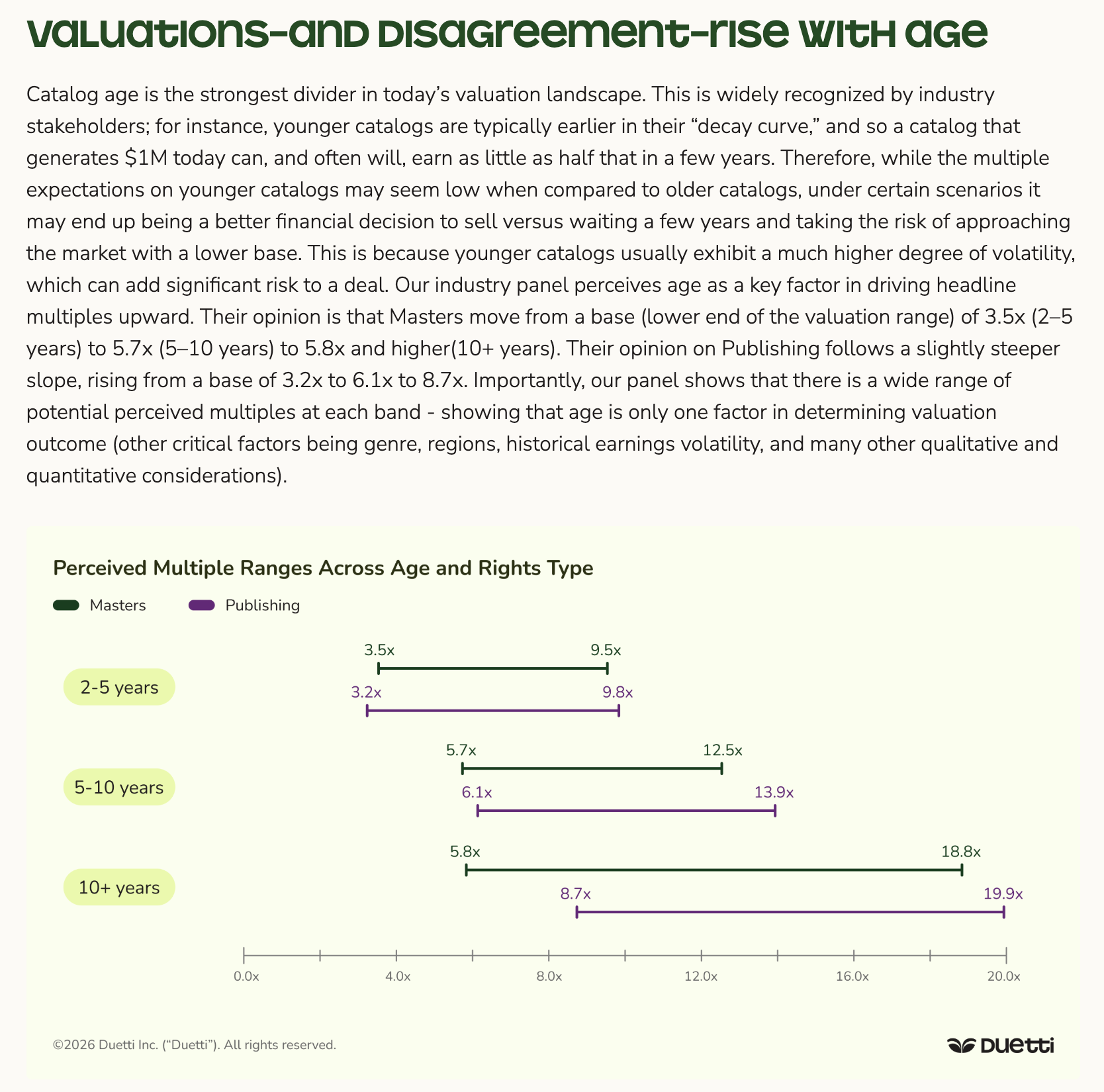
Yes, older catalogs are worth more. That's expected. What's interesting is that they're also the most debated. Once a catalog crosses ten years old, the gap between what people think it should be worth becomes massive.
Why? Because longevity alone isn't valuable. A catalog that continues generating revenue through streaming, sync, social media, licensing, and cultural relevance is a completely different asset than one that simply survived for ten years.
This is exactly why artists need to stop measuring success by first-week streams and start thinking about lifetime value.
The Market Is Getting Optimistic Again
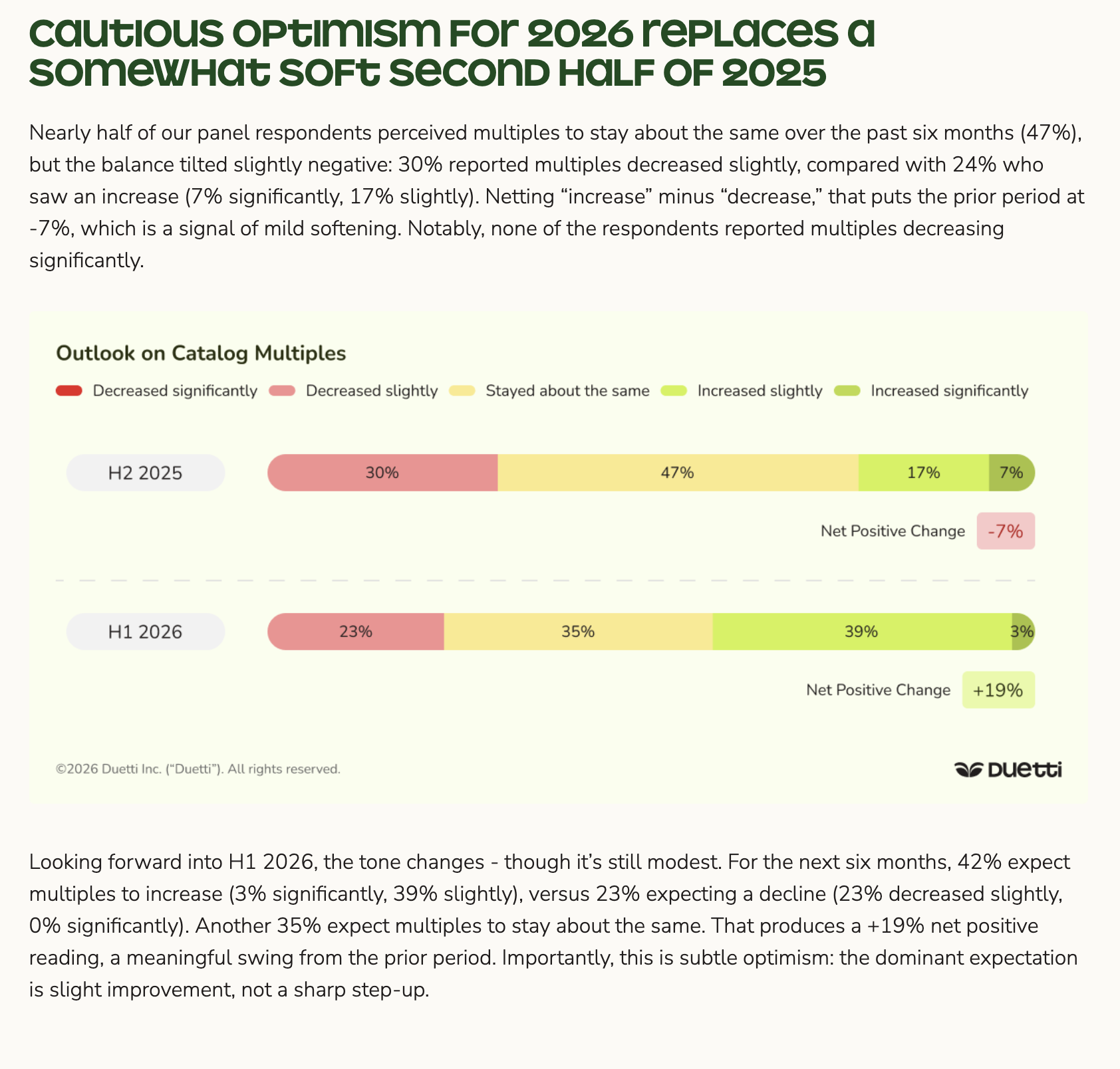
The second half of 2025 showed signs of cooling. Now industry professionals expect catalog valuations to tick back up through the first half of 2026.
That doesn't mean we're heading back to the catalog-buying frenzy of a few years ago. It means buyers are becoming more selective. The money hasn't disappeared. The standards have gone up.
Latin Is Leading. Hip-Hop Needs To Pay Attention.
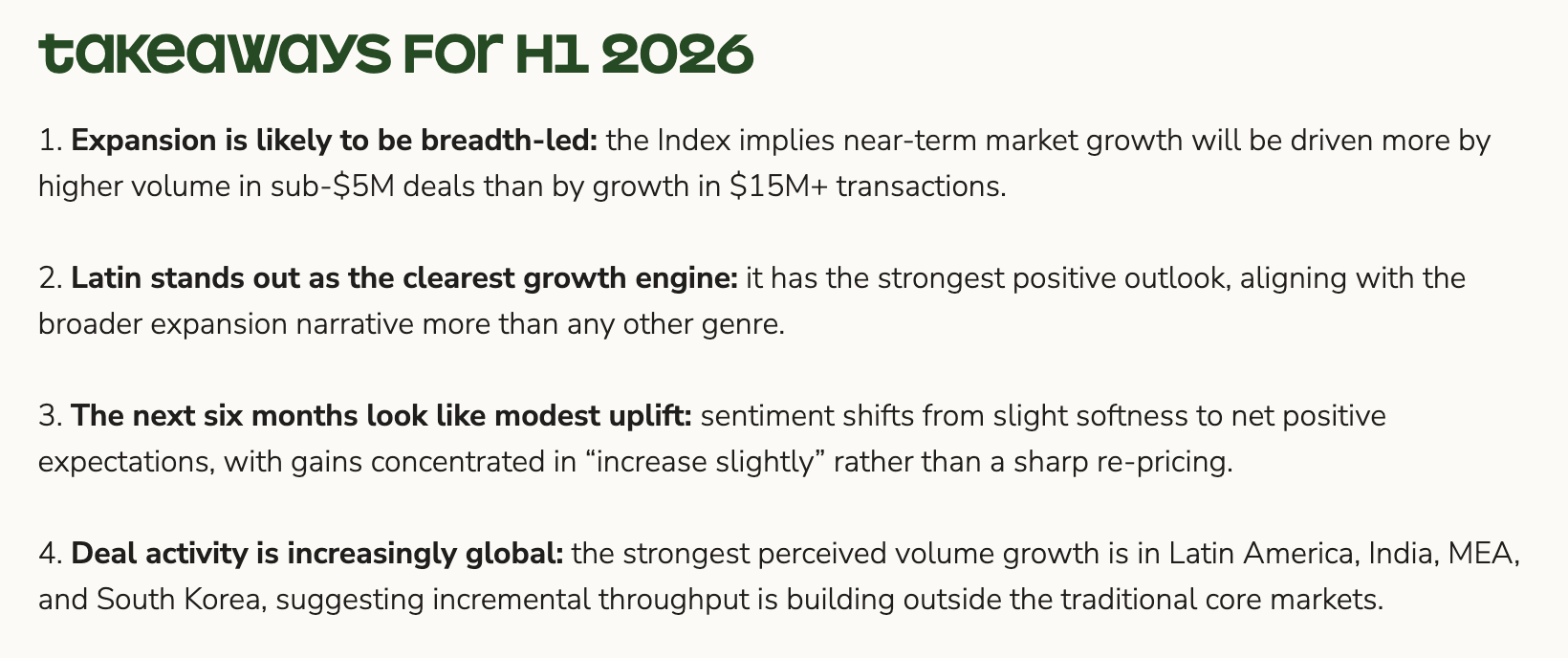
One of the biggest surprises in the report is where buyers expect growth. Latin, Pop, Country and EDM are projected to see the strongest increase in catalog activity. Hip-Hop and R&B? Almost flat.
As someone who's worked across hip-hop campaigns for years, I don't think this means hip-hop is dying. I think it means the market is maturing.
For a long time, a lot of value in hip-hop came from cultural momentum. Investors are now asking a different question: will this catalog still be producing cash flow ten years from now? Those are two very different conversations.
The Biggest Opportunity Isn't Where The Headlines Are
Everyone talks about the $100 million catalog acquisitions. But according to this report, the biggest growth is expected to happen in catalogs worth under $1 million.
Read that again. The future isn't only owned by legacy artists. It's being built by independent artists creating valuable intellectual property today. That's probably the most exciting takeaway in the entire report.
Geography Is Changing Too
The strongest growth isn't expected in the U.S. It's Latin America. It's India. It's South Korea. It's the Middle East and Africa.
Music has become a global asset class, but a lot of artists are still marketing like it's 2018. If your strategy only considers your local market, you're already behind.
Stop Thinking Like A Content Creator
This report confirms something I've been saying for a long time. We're entering an era where artists need to stop thinking like content creators and start thinking like asset managers.
Every release isn't just another song. It's another piece of intellectual property. Every master. Every publishing split. Every licensing opportunity. Every strategic rollout.
You're either increasing the long-term value of your catalog — or you're leaving value on the table.
Takeaway
The artists who build with an asset-manager mindset won't just have bigger releases. They'll have businesses worth buying.